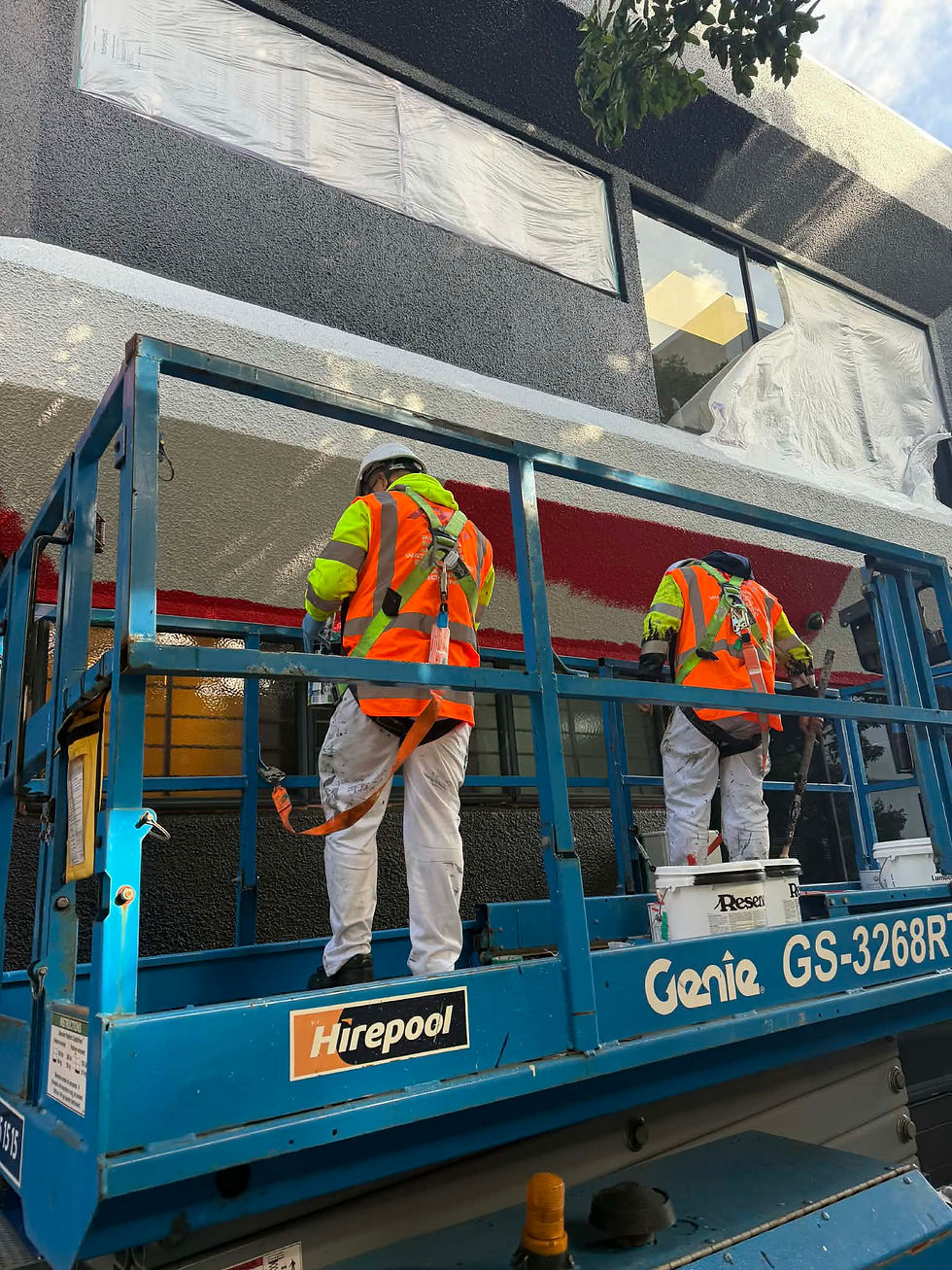
Why Roof Access Is Becoming a Design Issue, Not Just a Safety Issue
- Jun 23
- 3 min read

For many years, roof access and height safety were viewed as operational matters.
The building was designed, constructed, handed over and then somebody else was left to figure out how contractors, maintenance teams and facilities managers would safely access the roof.
Today, that mindset is changing.
Increasingly, architects, property owners, facilities managers and contractors are recognising that safe roof access is not simply a compliance requirement. It is a design consideration that impacts the entire lifecycle of a building.
The Problem
At APS, we regularly inspect commercial and industrial buildings where maintenance activities require people to access rooftops for:
HVAC servicing
Solar maintenance
Gutter cleaning
Roof repairs
Building wash services
Plant inspections
Asset replacement
What we often find is that the equipment requiring maintenance has been carefully considered, but the pathway to safely reach that equipment has not.
The result can include:
Unsafe access routes
Unprotected roof edges
Fragile roofing materials
Inadequate roof hatches
Missing, excessive, or poorly located anchor systems
Limited maintenance access around plant
None of these issues are typically intentional. More often, they are the result of roof access being considered too late in the design process or advice that is given from a supplier of equipment, as appose to someone that understand the operational use capacity.
The Cost of Retrofitting
When safe access is not incorporated during design, building owners are often left with expensive retrofit solutions later.
Adding walkways, guardrails, ladder systems or anchor points after construction is usually more disruptive and more costly than incorporating these considerations from the outset.
More importantly, retrofitting often involves compromise.
The ideal solution is rarely available once structural layouts, services and roof plant locations have already been finalised.
The Shift Toward Design-Led Safety
Internationally, there is a growing focus on designing risk out of buildings before construction begins.
Leading organisations are encouraging architects and designers to consider:
How maintenance personnel will access the roof
How frequently equipment will require servicing
What hazards will be encountered during routine maintenance
Whether passive protection can be used instead of administrative controls
How future upgrades may impact roof safety
This shift aligns strongly with the principles of good design and long-term asset management. Safe access should not be viewed as an add-on. It should be viewed as part of the building’s functionality.
Compliance Is Only the Starting Point
Many organisations approach roof access from a compliance perspective.
The question becomes:
“Are we compliant?”
A better question may be:
“Can people safely and efficiently access the roof every time they need to be there?”
Compliance establishes the minimum standard.
Good design goes further.
A well-designed roof access system can:
Reduce risk
Improve maintenance efficiency
Lower lifecycle costs
Support contractor safety
Improve asset management outcomes
What We Are Seeing Across New Zealand
As rooftop plant becomes more complex and buildings increasingly incorporate solar systems, mechanical services and specialist equipment, access requirements are growing.
The roofs of modern buildings are no longer empty spaces.
They are active work environments.
Building owners are becoming more aware of their PCBU obligations, facilities managers are demanding better access solutions, and design teams are increasingly seeking specialist advice earlier in the project lifecycle.
Looking Forward
The most successful projects are the ones where roof access is considered early.
Not because somebody wants to install a guardrail or a ladder but because somebody has taken the time to think about the people who will maintain, inspect and operate that building for the next 20 years.
Height safety is most effective when it becomes part of the design conversation rather than a problem that needs solving after construction.
The buildings of the future will not simply be designed to look good and perform well. They will be designed to be safely maintained for decades to come.
If this topic is of interest to your team, please get in touch with Sarah Stewart on 021 947 874 / sarah@apsltd.co.nz to arrange an in-firm or online CPD presentation.